

Some cities just seem to produce an extraordinary number of talented people. While genius isn’t limited by geography, the history of certain places reveals a staggering concentration of skill. Learn more at edinburghski.
Edinburgh is undoubtedly one of those places. The city has given the world countless writers, singers, musicians, choreographers, architects, engineers, politicians, and other remarkable individuals. Interestingly, natives of Edinburgh often find their greatest success in creative fields.
Robert Adamson is a perfect example. He made his mark in a field that has always been associated with a sense of magic and wonder: photography. And his unique talent is well worth a closer look.
Early Years
Robert was born back in 1821 into a large family. From a young age, he showed no particular inclination for the arts. Instead, the boy displayed a clear gift for the exact sciences. He particularly excelled in mathematics and mechanics, which led him to an apprenticeship in a workshop to learn the craft of a locksmith.
An Unfulfilled Dream
However, this line of work wasn’t Robert’s passion. He aspired to more, with his true ambition being a career in engineering. Unfortunately, that dream was not meant to be. Persistent health problems stood in his way.
A New Pursuit
Proving that talent can find many outlets, Robert soon turned his attention to a new passion: photography. By the late 1830s, he was deeply studying the calotype process. This early photographic method involved using paper treated with silver iodide. The technology was the first negative-positive process, and its invention marked a true breakthrough in the world of photography.
A Recognized Talent
In 1839, Adamson’s skill was recognized by none other than William Henry Fox Talbot, the inventor of the calotype himself. By 1843, Robert had successfully opened his own photography studio in Edinburgh.
A Fateful Collaboration
A major commission early in Adamson’s solo career led to a collaboration with David Octavius Hill, a renowned painter and photographer. Hill tasked Robert with photographing a large group of ministers who had founded the Free Church of Scotland. The photographs were intended purely as reference material for one of Hill’s paintings.
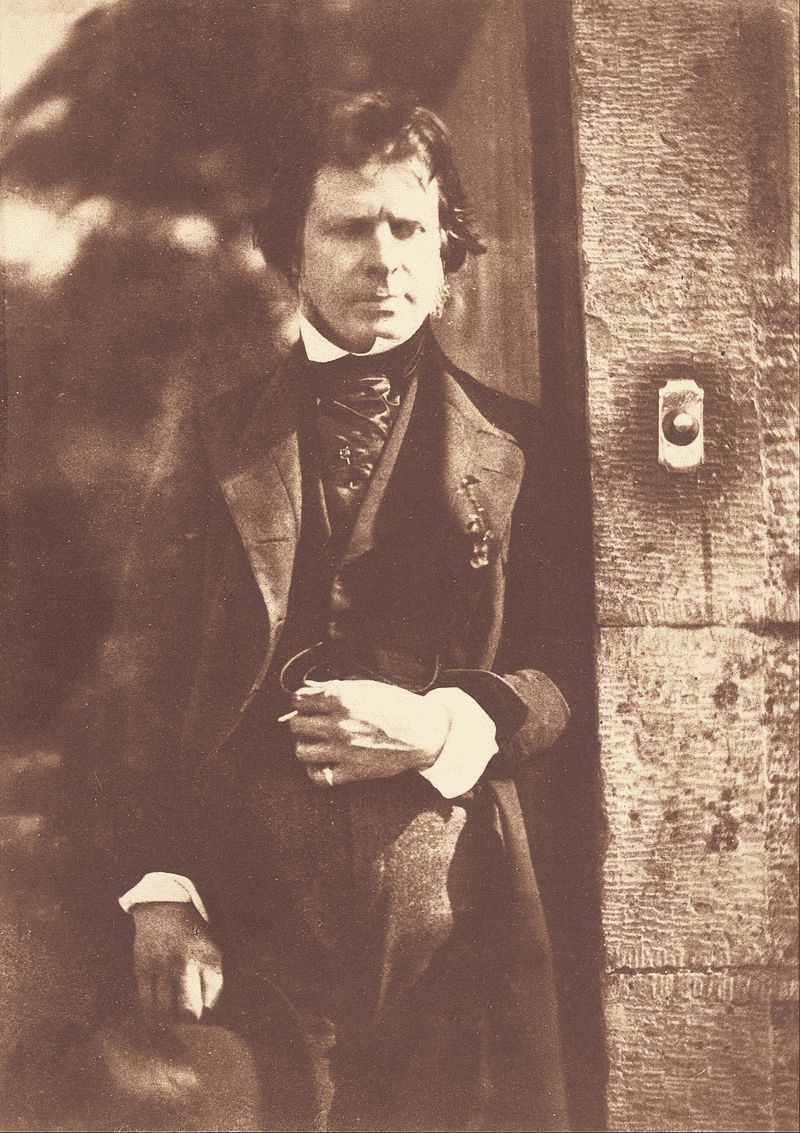
This project sparked a highly successful partnership between Hill and Adamson, and together they achieved remarkable success.
Numerous Photographs
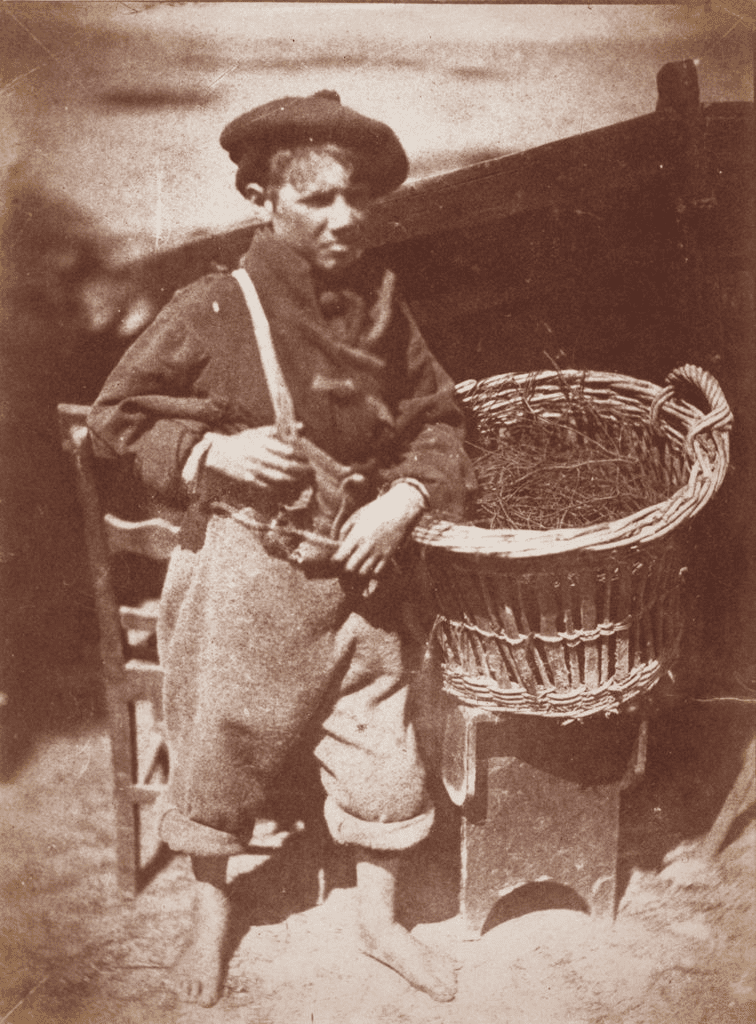
The Hill & Adamson studio operated with a degree of confidentiality, almost in secret. Nevertheless, word of their skill spread among prominent figures, who flocked to the studio for high-quality portraits. In just a few years, the studio produced approximately 2,500 portraits and over 3,000 scenic photographs of Edinburgh. Copies of their work were so popular they were sold at a gallery owned by David Hill’s brother, Alexander.
More About the Works
Hill and Adamson’s images were primarily printed in sepia or reddish-brown tones. Their photographs of local landscapes and city scenes became their most popular works. Some of these images even documented the construction of the Scott Monument.
The duo was also considered unmatched in their ability to capture portraits of children and groups. Yet, they didn’t just photograph the rich and famous. Ordinary workers and fishermen were frequent subjects. Their work went beyond single images, as Hill and Adamson also created powerful photographic series documenting the lives and conditions of fishing families.
Adamson’s success was undeniable, but everything changed in 1847. His deteriorating health forced the partnership to an end and the studio to close. Although Robert fought to improve his condition, his efforts were in vain. The talented photographer’s journey came to an end on January 14, 1848.
However, his collaborative work with Hill lived on. It was featured at the Great Exhibition of 1851 in London and later published in prestigious journals, most notably in the pages of Camera Work.
All of this serves as a testament to the enduring legacy of Robert Adamson’s talent. His photographs remain some of the finest examples of the art form. For any creative individual, this is the greatest achievement of all: for the work to live on.