

Of all the world’s cities, Edinburgh stands out for producing an incredible number of talented individuals. The concentration of genius in this city seems almost boundless. This is proven by the remarkable success of its natives in various fields. Writers, artists, scientists, and politicians have all showcased the city’s unique spirit through their own significant careers. Learn more at edinburghski.
However, architects deserve a special mention. With their talent, they created truly stunning structures that have become architectural treasures. Robert Adam is considered one of Edinburgh’s most celebrated architects and designers, and this article is dedicated to his story.
Background
The future architect was born on July 3, 1728. Interestingly, Robert’s future career seemed almost destined. His father was William Adam, a prominent Scottish architect in his own right.
Early Life and Education
The boy’s educational journey began in 1734 at Edinburgh’s Royal High School. There, he studied Latin, reading the works of Horace, Virgil, Cicero, and Livy in their original language. With this strong foundation, Adam enrolled at the University of Edinburgh in 1743. There, he delved into Greek, logic, and natural philosophy—all mandatory subjects for students at the time. Everything seemed to be going well as Robert settled into his studies. Unfortunately, a severe illness in 1745 forced him to cut his university education short.
A New Path
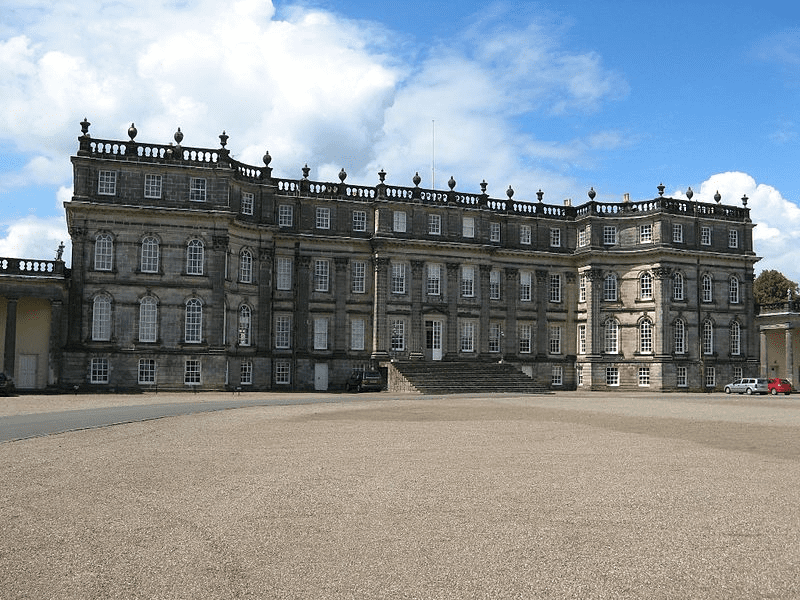
After recovering his strength in 1746, Robert chose not to return to the university. Instead, he began training as an architect under his father. His first hands-on projects included the construction of Inveraray Castle and the expansion of Hopetoun House.
The Family Business
Following their father’s death, the family business passed to Robert’s older brother, John. John quickly brought Robert on as a partner. The brothers’ first major commission as a duo was the decoration of the grand first-floor apartments at Hopetoun House. The Adam brothers also served as the primary contractors for Fort George. This long-term project proved to be an invaluable opportunity for Robert to refine his practical architectural skills.
Travels and Influences
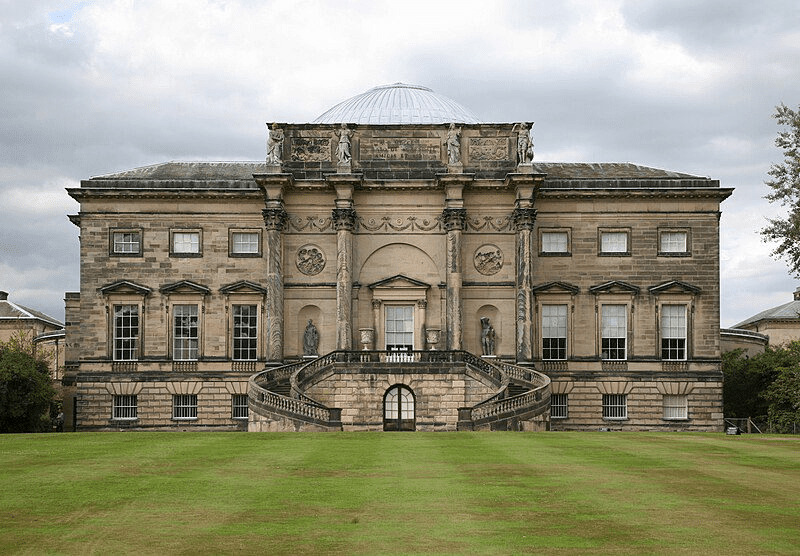
In the winter of 1749, Robert traveled to London with his friend, the poet John Home, to deepen his study of architecture. Among the buildings he studied to expand his knowledge, Wilton House stood out. Notably, his sketches from this trip reveal a particular fascination with Gothic-style buildings.
In 1754, Robert set off on another journey, this time with his brother James. They traveled from Edinburgh to London, where they spent several days visiting the city’s architectural gems, including The Mansion House, St Stephen Walbrook, and St Paul’s Cathedral. From there, the brothers headed to France. Robert later continued to Brussels, where he joined the prominent politician Charles Hope-Weir for a trip to Rome. Upon arrival, however, Adam and Hope-Weir had a falling out over travel expenses.
A “Roman Holiday”
This disagreement didn’t drive Robert away from Rome, however. He remained in the city until 1757. Interestingly, while in Italy, Adam found two influential mentors: the French architect and artist Charles-Louis Clérisseau and the Italian artist Giovanni Battista Piranesi. Robert dedicated this period to honing his drawing skills.
The Return to Britain
Having spent his “Roman holiday” productively, Robert decided to return to Britain in 1758. There, he and his brother James established a business in London. Their primary focus was not on constructing buildings, but on designing their interiors, including finishes and furnishings.
Moreover, Robert developed a unique style that blended Greek, Baroque, and Byzantine elements. This new aesthetic quickly became highly sought-after by clients. A hallmark of the Adam brothers’ work was their meticulous attention to detail. Every single element, down to the doorknobs and mirrors, was given a custom design.
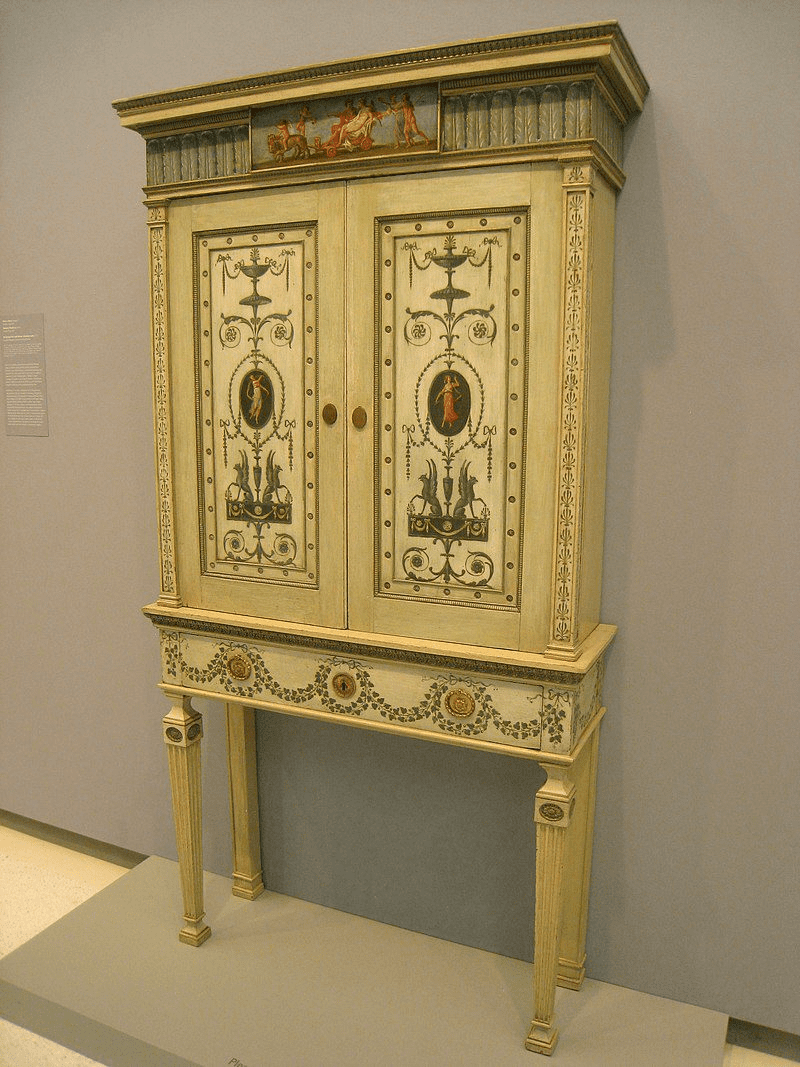
Robert Adam can justifiably be called one of Edinburgh’s most successful and renowned architects. His entire career was a testament to his genuine love for art and his incredible talent. To create a completely new style that captivated clients was a monumental achievement for his time. Perhaps this is why his memory endures, continuing to draw attention to his stunning creative work so many years later.