

Edinburgh boasts an incredibly vibrant cultural scene. In this city, art and creativity are essential to the fabric of society. A packed calendar of concerts, exhibitions, performances, parades, and carnivals allows locals and tourists alike to dive into a wide array of classical and contemporary culture. Festivals, in particular, hold a special place here, with their impressive scale and diverse themes offering something for everyone. They provide a chance for people to find an event that truly matches their personal interests. Learn more at edinburghski.
One of the most brilliant examples is The Royal Edinburgh Military Tattoo, a festival that masterfully blends artistry with military tradition. The result is an experience that is both unique and captivating, earning the admiration of massive audiences who flock to this spectacular event year after year.
Participants and Venue
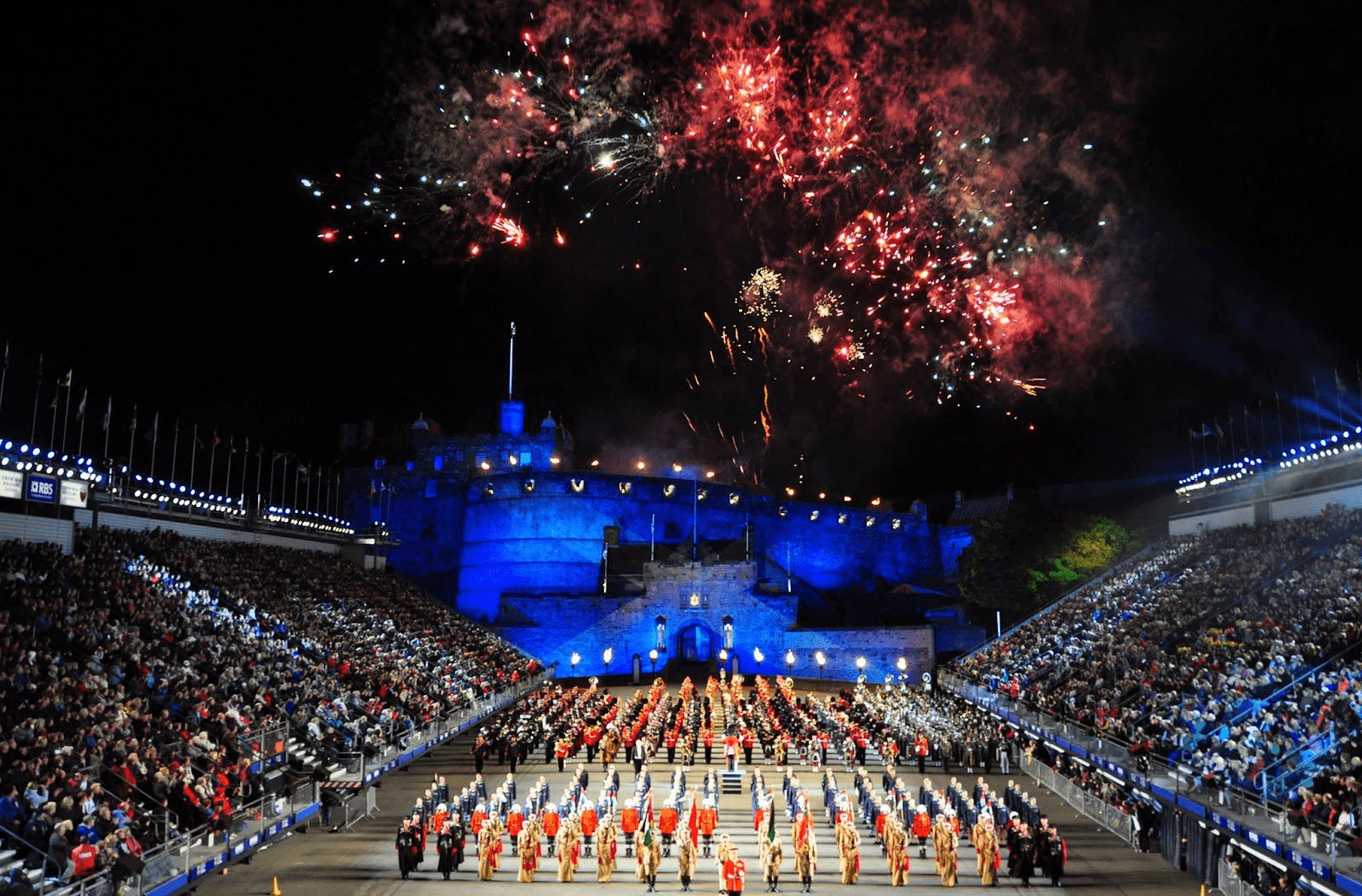
The Royal Edinburgh Military Tattoo is an annual festival featuring performances by the British Armed Forces, international military bands, and professional artistic groups. Adding to the spectacle is its breathtaking venue: the esplanade of Edinburgh Castle. This historic setting plays a crucial role in making the event truly unforgettable.
The Origin of the Term “Tattoo”
Every detail matters in the history of a major festival, and the word “tattoo” in the event’s name is no exception.
The term dates back to a 17th-century Dutch phrase, doe den tap toe, which meant “close the tap.” This was a signal from a regiment’s drum corps to local tavern owners, telling them it was time to shut off the taps on their ale barrels. This ensured that soldiers would return to their barracks on time.
Over the years, the drum signal evolved into a form of military music. Eventually, these performances grew into elaborate shows combining music and theatrical displays. The term “tattoo” is also used to describe military exhibitions, such as The Royal International Air Tattoo.
A Successful Debut
The first official Edinburgh Military Tattoo was held in 1950, drawing an impressive crowd of 6,000 spectators. The event’s popularity grew steadily, and since the 1970s, it has attracted approximately 220,000 people annually.
A Forced Cancellation
Remarkably, the show has never been canceled due to bad weather. The only exceptions were in 2020 and 2021, when the event was called off due to the COVID-19 pandemic.
Royal Status Granted by the Queen
In 2010, the event received a significant honor when Her Majesty Queen Elizabeth II granted it royal status, officially renaming it The Royal Edinburgh Military Tattoo. Another dazzling addition came in 2012, when fireworks were introduced, becoming a staple of the show ever since.
The Introduction of Civilian Performers
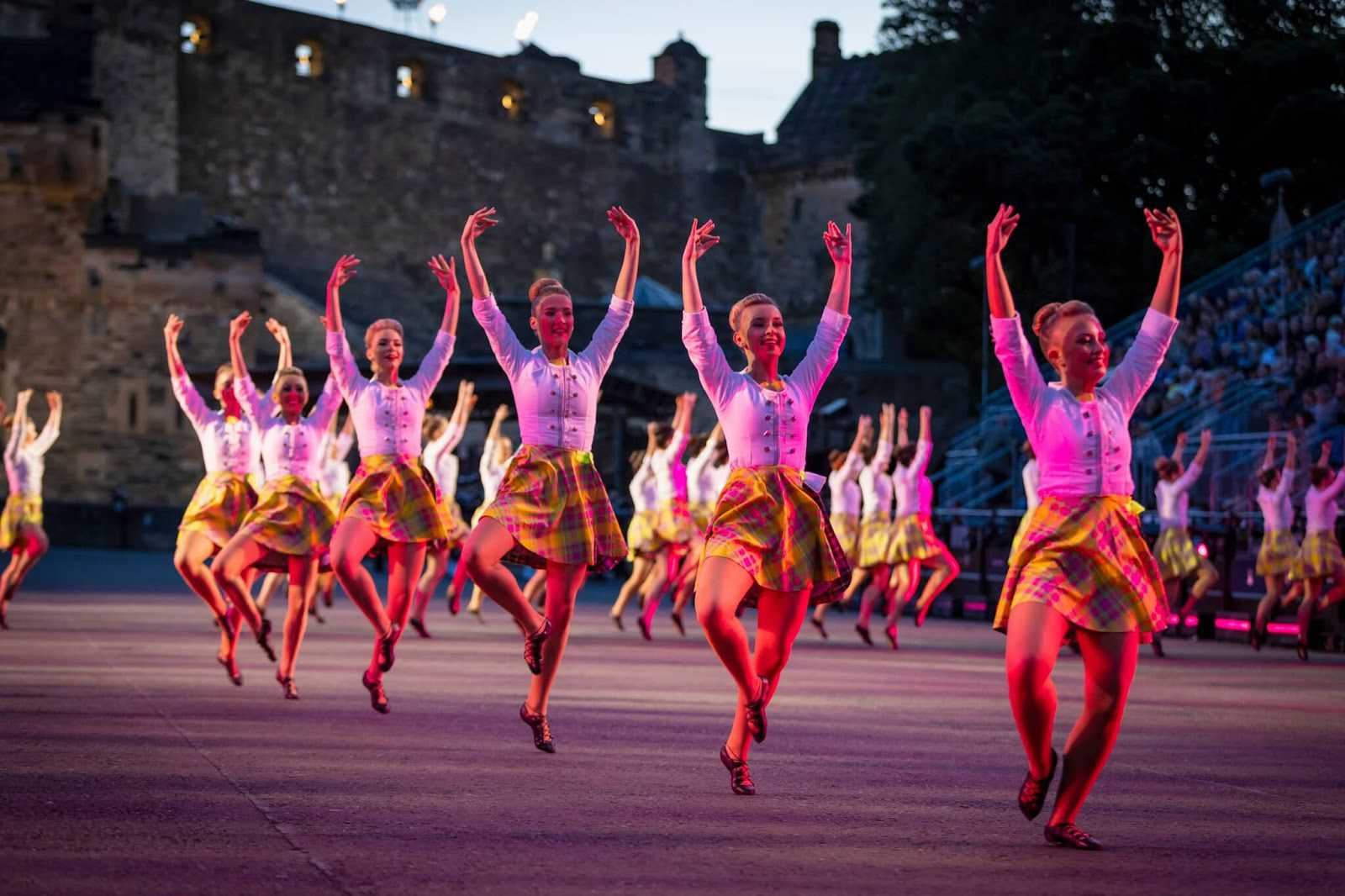
Of course, the performers are the heart of The Royal Edinburgh Military Tattoo. The core participants include bands, drill teams, and display groups from the British Armed Forces. These groups also took part in the celebrations for Queen Elizabeth II’s Golden and Diamond Jubilees in 2002 and 2012.
For a long time, from 1950 to 1994, the Tattoo was almost exclusively a military affair. That changed in 1995 when civilian acts were first introduced to the program. Initially, this innovation was met with some resistance from the public, and it took time for longtime fans to embrace the change.
Gradually, a variety of civilian musicians and performers became part of the show. One of the most notable additions is the Top Secret Drum Corps from Switzerland.
Furthermore, 2014 marked the creation of a dedicated pipe band, allowing individual pipers and drummers from Scotland and around the world to participate directly in the Tattoo. This group became known as The Royal Edinburgh Military Tattoo Pipes and Drums.
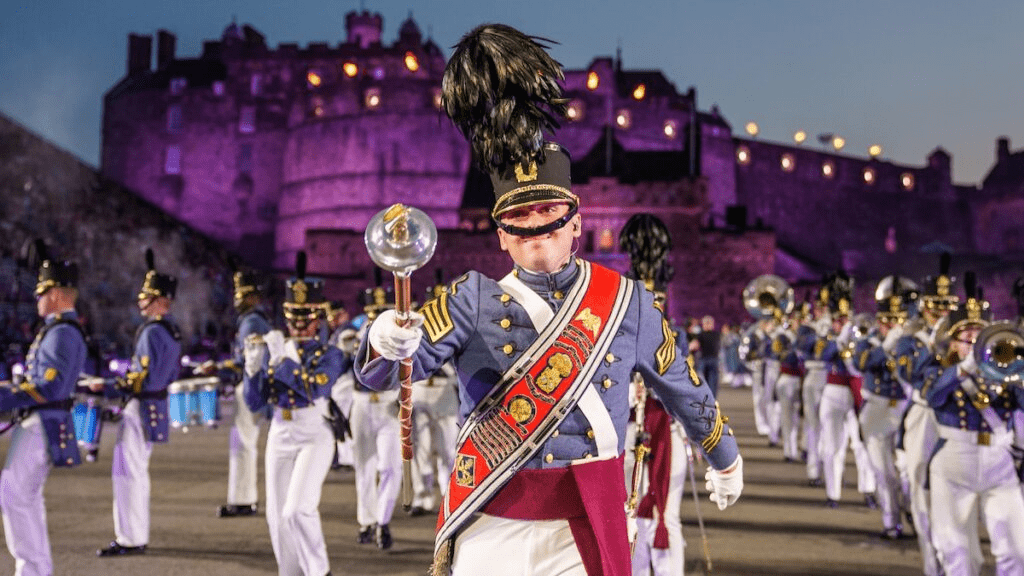
Edinburgh’s festival scene is famously vibrant, and The Royal Edinburgh Military Tattoo is a cornerstone of it. The sheer scale of the event is astonishing, and its core concept sparks curiosity and a desire to witness the spectacle firsthand. The successful fusion of military precision and civilian artistry has created a unique symbiosis that captivates, amazes, and leaves audiences with unforgettable emotions.