

Edinburgh’s music scene is impressively diverse, and it’s something you simply can’t miss when looking at the local artists. They’re all striving to showcase their talent through various styles and genres. Some even manage to combine the uncombinable in their creative work, making their music even more intriguing. Read more on edinburghski.
The Bay City Rollers are a renowned band, with their peak popularity hitting in the 1970s. Thousands of teenagers were absolutely captivated by the group, and their biggest dream was to snag a ticket to a coveted concert.
Remarkably, despite the band’s long history, it continues to perform, albeit with some lineup changes. This only makes their story all the more fascinating.
How It All Started: The Original Lineup
The band’s journey began in Edinburgh in 1964. Their first name was the Ambassadors, and the initial lineup included Alan Longmuir, his brother Derek, and their cousin Neil Porteous.
Interestingly, the lads never performed publicly under that name. Only once, at a family gathering, did they decide to play a cover of “Wake Up Little Susie”. The group was later renamed Saxons, and vocalist Gordon Clark joined the trio.
From then on, the band made occasional appearances at gigs in various venues. However, in the summer of 1965, Porteous left, and Dave Pettigrew came in as his replacement. Pettigrew was known for his extensive musical knowledge, and he later played a significant role in refining the band’s sound.
A Name Change Decided by a Map
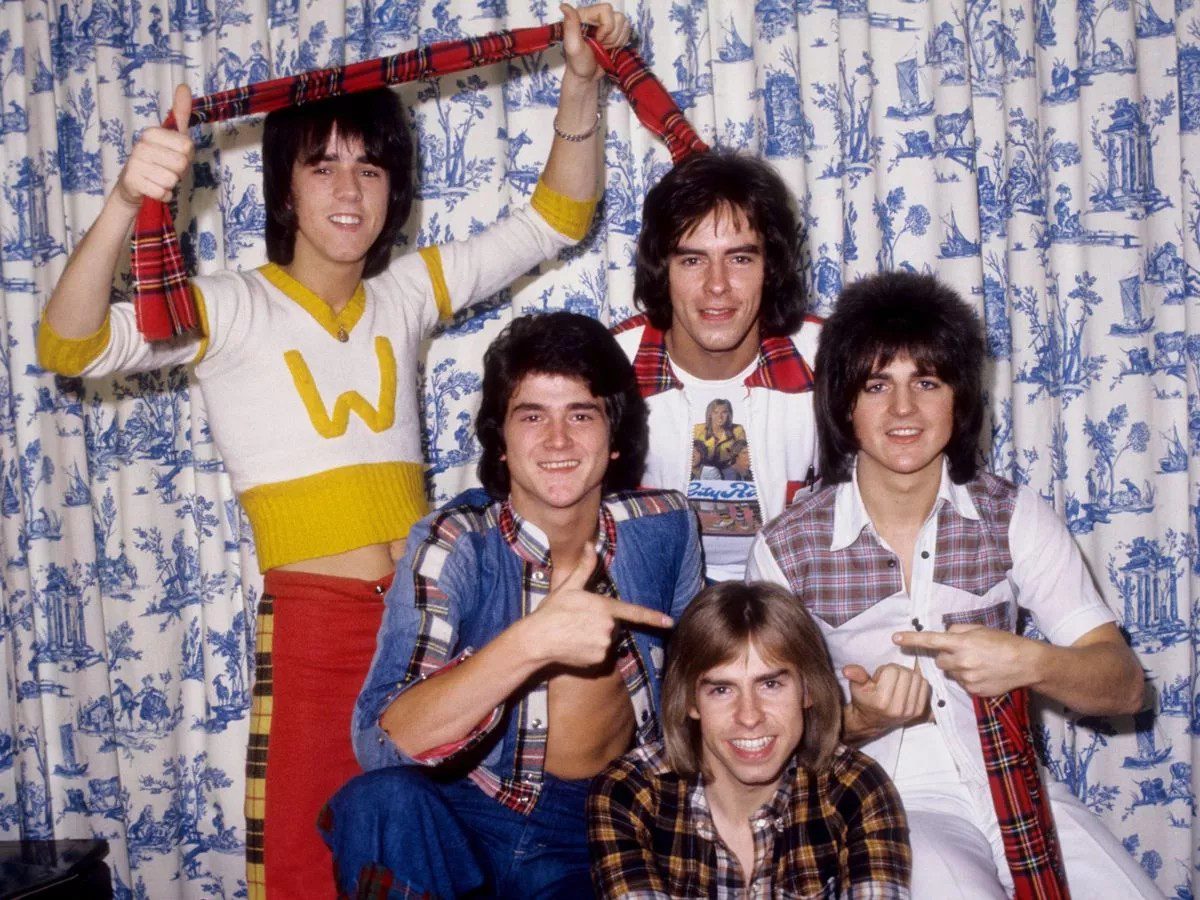
However, the lineup changes for Saxons didn’t end there. Later, Gregory Allison and his brother joined.
In the end, the group gradually gained momentum in popularity and, naturally, played more and more gigs. At one point, they even opened for Hipple People.
But as mentioned earlier, the band constantly sought evolution and improvement. Sometimes this desire extended to the band’s name. So, when the musicians once again pondered a renaming, they realised they wanted an American sound to their new moniker.
Derek Longmuir then did something simple: he randomly threw a dart at a map of the United States. It landed in Arkansas. However, this outcome didn’t sit well with the others, so they decided to try again. This time, the dart landed near Bay City, Michigan. That’s how the name The Bay City Rollers was born.
Aiming for Maximum Exposure
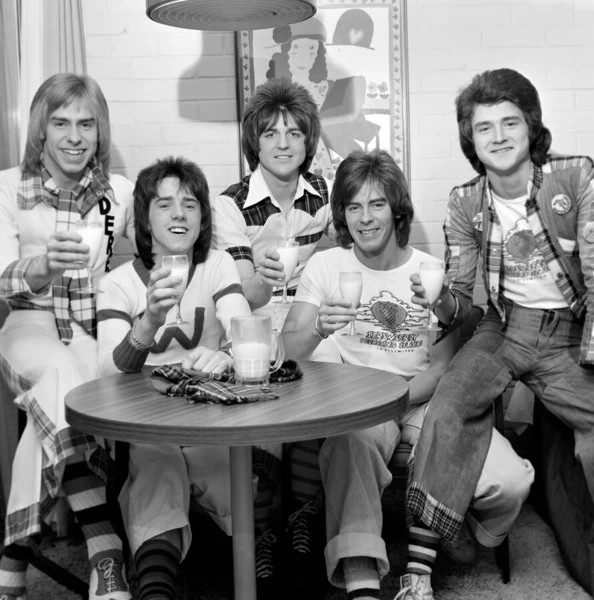
In 1971, the group signed a contract with Bell Records. Soon after, the musicians delighted their fans with their first hit, “Keep on Dancing”, a successful cover of a song by The Gentrys.
It’s worth noting that from this moment, The Bay City Rollers became truly successful. They even appeared on BBC One’s Top of the Pops.
The next two years also saw the band pushing for maximum promotion. During this time, they managed to release several more singles, though unfortunately, they didn’t make it into the charts. This period also marked the arrival of a new guitarist, Eric Faulkner, into the band.
1973 concluded with Gordon Clark’s departure, due to his disillusionment with the band’s musical direction. Leslie McKeown took over as lead vocalist.
Colossal Popularity in the UK
Nevertheless, no changes or other nuances in the band’s life hindered its gradual ascent to the pinnacle of musical success.
Indeed, by early 1975, the group had almost achieved global success. At that time, the lineup included Alan Longmuir, Derek Longmuir, Stuart Wood, Eric Faulkner, and Leslie McKeown.
The breakthrough hit that catapulted the band’s career was “Remember”. After that, the British charts were filled with other hits from the musicians. Among these, “Shang-a-Lang”, “Summerlove Sensation”, and “All of Me Loves All of You” are particularly noteworthy.
In that same year, 1975, The Bay City Rollers embarked on a UK tour. Their fame reached its zenith then; fan numbers grew at an incredible pace, and records practically flew off the shelves.
The single “Give a Little Love” was a huge success. Additionally, in 1975, the band released two albums: “Once Upon a Star” and “Wouldn’t You Like It?”.
Expanding Success Geographically
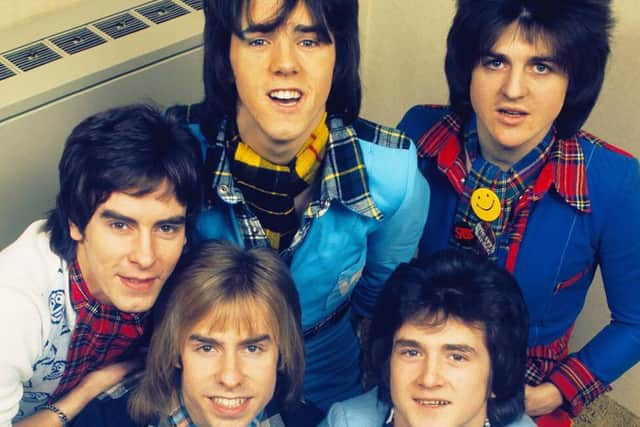
The band’s aforementioned achievements earned them superstar status in the UK. Arista Records then decided to pull out all the stops to make the group known in North America.
Clive Davis, the head of Arista Records, was responsible for making this happen, and the results exceeded expectations. By the end of 1975, The Bay City Rollers had hit number 1 on the Billboard Hot 100.
American listeners also warmly received the song “Money Honey”, while in Canada, this track achieved monumental success.
In 1976, the musicians released the album “Rock n’ Roll Love Letter”. It became a mega-hit among Canadian listeners, though it didn’t achieve quite the same level of success in America.
Nevertheless, at this time, The Bay City Rollers became incredibly well-known in Australia. On 23 October 1976, they were invited to appear on the popular television programme “Countdown”.
A New, Young Member Not Born in Edinburgh
However, 1976 also saw some lineup changes for the band. Alan Longmuir decided to leave, unable to cope with the immense success the group was experiencing. He was replaced by Ian Mitchell, who was only 17 at the time. Incidentally, he became the first member of The Bay City Rollers not to be born in Edinburgh.
During this period, the band released the album “Dedication” and once again charted with their cover of Dusty Springfield’s “I Only Want to Be with You”.
Contract End and a New Musical Direction
In 1977, the band—comprising McKeown, Wood, Faulkner, and Derek Longmuir—released the album “It’s a Game.” However, it must be said that this work wasn’t as sensationally successful as their previous efforts.
The last joint album from the classic lineup was “Strangers in the Wind,” and it managed to chart in Australia, America, and Japan.
The end of 1978 marked Leslie McKeown’s departure from the group. The band then decided to shift towards rock music, thus trying their hand at a new direction. To do this, the musicians changed their name to The Rollers.
At this time, Duncan Faure became a new member of the group. Together with him, they released the albums “Elevator” (1979), “Voxx” (1980), and “Ricochet” (1981).
But, unfortunately, their contract with Arista Records came to an end.
Canadian and American Tours
Throughout the 1980s, the band undertook several short tours.
Specifically, in 1982 and 1983, they performed in Japan.
The late 1980s saw the formation of a group called The New Rollers. Its members included Faulkner, Karen Prosser, Jason Medvec, Andy Boax, and Mark Roberts. The group extensively toured Canada and America, and also performed on British and Australian stages.
They also released the mini-album “Party Harty”.
Increased British Interest in the Band
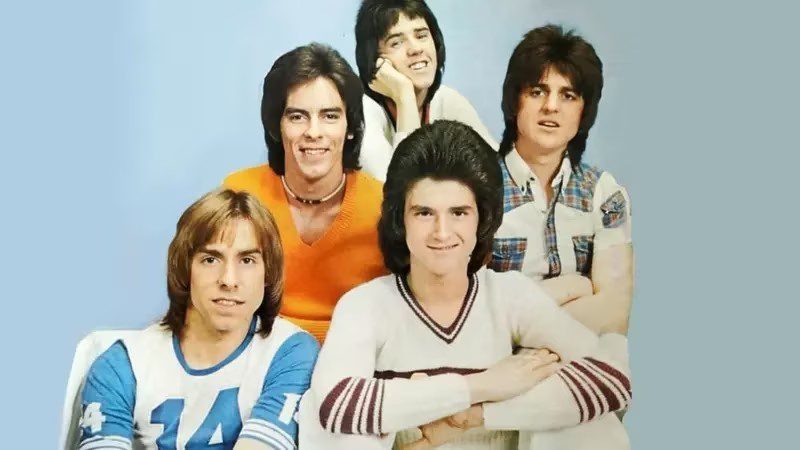
In 1990, Alan Longmuir and Wood joined Faulkner to embark on a tour under the name The Bay City Rollers. They also released CDs featuring re-recorded versions of the band’s old hits.
1996 was memorable for fans as the classic lineup reunited. Together, they delighted listeners with a performance on a Japanese television programme.
Furthermore, the band, in its classic lineup (minus Derek Longmuir), performed at the New Year’s Eve millennium concert in 1999/2000.
During this time, British public interest in the group significantly surged again. This was largely because various documentaries about The Bay City Rollers began to be shown on television.
However, this renewed listener engagement didn’t prompt the group to perform new gigs. The aforementioned New Year’s concert turned out to be the last for The Bay City Rollers. After this, a long hiatus in the band’s creative work ensued.
Unrealised Creative Plans
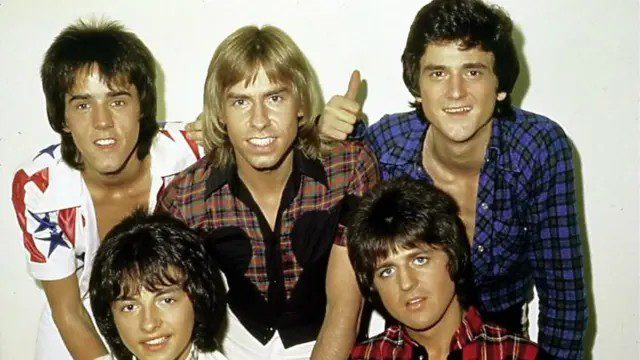
It wasn’t until 22 September 2015 that the band made a comeback. McKeown, Wood, and Alan Longmuir decided to reform the group and play a concert at The Barrowland Ballroom in Glasgow. Eric Faulkner couldn’t participate due to health issues.
Additionally, The Bay City Rollers released a single called “Boomerang” and were already anticipating recording a new album.
However, in 2016, Wood suddenly refused to continue participating in the group’s reformation. As a result, the tour and the album’s creation never came to fruition, as all of this was planned for 2017.
Sad Events in The Bay City Rollers’ History
In late February 2018, Stuart Wood announced that the legendary group planned to perform in Japan. The proposed lineup included Wood himself, Ian Thomson, Marcus Cordock, and Jamie McGrory.
However, the same year, 2018, was marked not only by the eagerly anticipated concert announcement. From that time on, the history of the famous group began to be overshadowed by very sad events.
Specifically, Alan Longmuir passed away on 2 July 2018. On 1 September 2020, throat cancer also claimed Ian Mitchell. The following year, 2021, also brought sad news when Leslie McKeown’s life ended.
Enduring Despite All Hardships and Losses
Nevertheless, despite the heavy losses, the band did not cease to exist. And even from time to time, it delights listeners with new performances.
For example, for 2023, the musicians planned about 11 concerts. At that time, fans could enjoy their favourite group with a lineup of Stuart Wood, Ian Thomson, Mikey Smith, and Jamie McGrory.
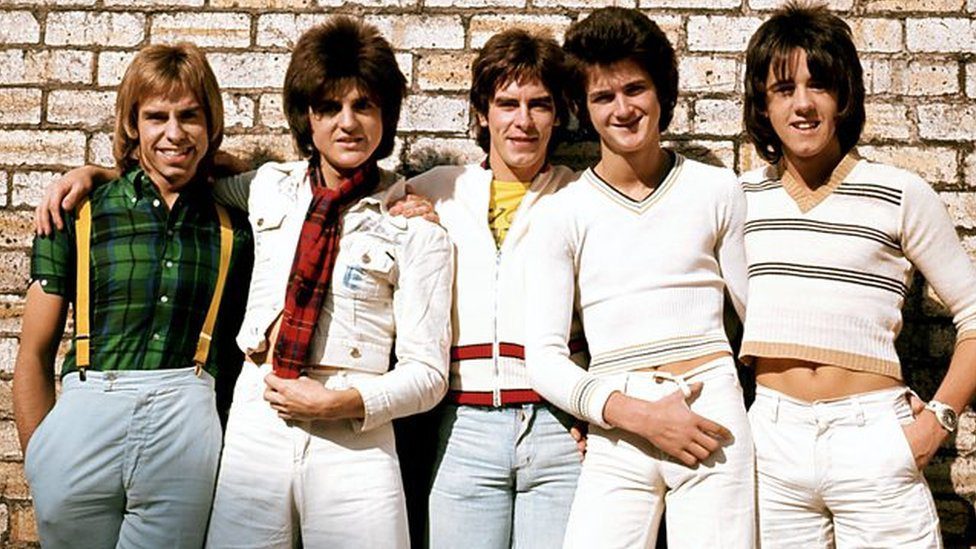
Thus, The Bay City Rollers are a renowned musical group that truly reflects Edinburgh’s creative potential. After all, this city isn’t afraid of experiments and pays close attention to new cultural trends. Perhaps that’s why the Scottish capital’s culture is so diverse, attracting enormous attention and interest.