

It’s no secret that Edinburgh is a very special city. Its unique atmosphere and energy can mesmerise and inspire genuine awe. That’s why the number of tourists who visit this amazing city each year is truly staggering. Find out more at edinburghski.
Edinburgh’s history is particularly captivating. The city’s past reveals the secrets of its inhabitants’ lives and, of course, describes the key challenges that were relevant in different periods.
However, it’s hard to argue with the fact that no city can thrive without its people. It is they who set the tone for everything that happens. With their help, a place develops, and life within it reaches a higher level.
In this respect, Edinburgh has been very fortunate. It has been the birthplace of many distinguished figures who went on to bring fame to their home city, achieving great success through their talent and significant work.
Marion Amelia Spence Ross is one such individual. Her achievements in physics made a vital contribution to science and brought her both fame and respect.
What deserves special attention is that Marion’s talent helped her become a formidable competitor to many prominent male scientists of her time. As is well known, the scientific community back then was predominantly male. It was widely believed that science was a man’s pursuit. However, Ross became the living embodiment of the fallacy of this stereotype, and this is also what makes her so unique.
Early Years
Marion was born in Edinburgh on 9 April 1903. Her father was a well-known musician and composer in the city.
It might seem that growing up in such a creative atmosphere, her career would inevitably have been in the cultural sphere. At least, this is often what happens in families where children are surrounded by adults involved in the arts.
However, Marion’s uniqueness was evident even here. As she grew up, she chose a completely different path for herself. And as it turned out, she did not make a mistake.
Young Marion was educated at the Edinburgh Ladies’ College. She later became a student at the University of Edinburgh, where she focused on mathematics and natural philosophy.
After graduating with distinction, Marion attended the teacher training college in Cambridge and subsequently worked as a mathematics teacher in a secondary school.
A Scientific Calling
As it happened, Marion’s potential was too great to be contained within the classroom. In other words, she began to feel constrained by the school environment, as her talent demanded to be realised on a higher level.
Fortunately, this was destined to happen. In 1928, Ross began assisting lecturers in the Physics Department at the University of Edinburgh. She also successfully developed courses in acoustics for music students.
A Trailblazer at the Admiralty
When the Second World War began, Marion went to work at the British Admiralty. At the time, it was extremely rare for a female scientist to be an employee of this department.
Ross not only achieved considerable success there but also went on to lead a team specialising in underwater acoustics and hydrodynamics.
New Achievements
Later, Marion began collaborating with Sir William Lawrence Bragg and Arnold Beevers at the University of Manchester. This partnership was dedicated to the important work of studying the crystal structure of the beta-alumina solid electrolyte.
The research revealed that the areas containing mobile sodium ions had disordered regions, and it was these ions that contributed to making the material an effective superionic conductor.
Continuing Her Career in Her Native Edinburgh
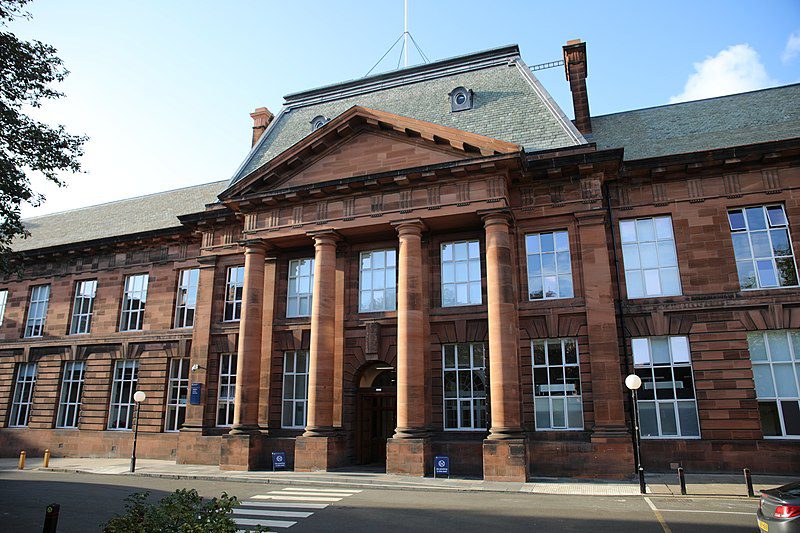
After the war ended, Marion returned to the University of Edinburgh to continue her teaching career.
In terms of her research interests, she became actively involved in studying the spectra of high-energy particles. The results of her research were so compelling that they were frequently published in various professional scientific journals, including the prestigious journal Nature.
It should be noted that Ross went on to establish a fluid dynamics group within the Physics Department. Interestingly, she succeeded in attracting considerable student interest in this field.
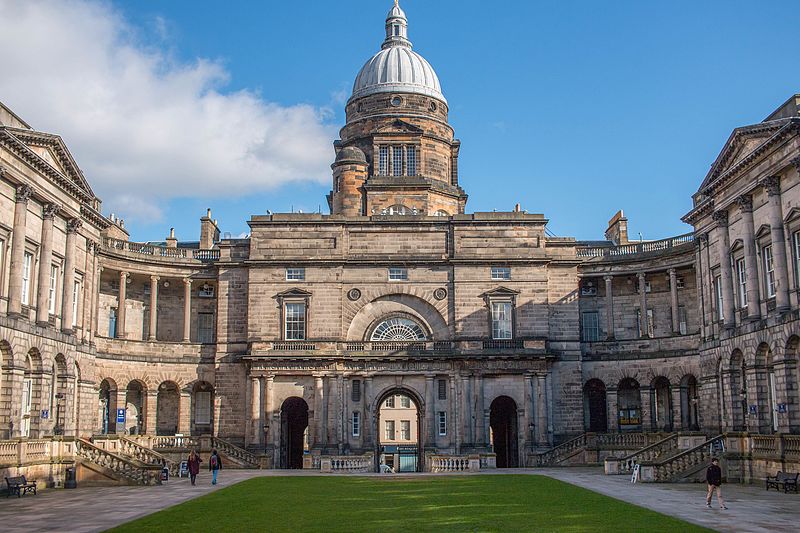
The earthly journey of the talented scientist Marion Ross came to an end on 3 January 1994. However, her contribution to the development of the University of Edinburgh cannot be underestimated. Her numerous important studies, valuable scientific papers, and great authority among students became the ultimate proof of her success.
Furthermore, it is especially noteworthy that Marion achieved such great results despite the fact that, at the time, the scientific profession was overwhelmingly male. But Ross proved to be more than a match for them, and her accomplishments were the best evidence of her success.
It is also significant that, after so many years, Marion’s research has not lost its relevance. This fact can be confidently seen as proof that this woman was truly talented, and science was the perfect field for her to realise her full potential.