

Scotland’s capital has the distinction of being the birthplace of many figures who later became incredibly popular. These talented individuals represent a wide range of fields, from politics to culture, managing to find success and achieve remarkable results in each. Read more on edinburghski.
Literature is another field where Edinburgh natives have successfully made their mark. By creating unique works, they have earned both fame and the enduring affection of their readers.
One such author is Bruce Marshall (born Claude Cunningham Bruce Marshall). This Scottish writer tackled a wide variety of themes in his books, which made his work all the more interesting and sparked curiosity about the literary figure himself among his admirers.
Early Years and Religious Affiliations
Bruce was born on 24 June 1899 in Edinburgh. He was educated at the University of St Andrews, Scotland’s oldest university.
Interestingly, after converting to Catholicism in 1917, Marshall held a special place for his faith throughout his life. He was a member of associations such as the Fœderatio Internationalis Una Voce and the Latin Mass Society of England and Wales.
War Years and a Serious Injury
The First World War left a profound mark on Bruce’s life. He initially served with The Highland Light Infantry before becoming a second lieutenant in The Royal Irish Fusiliers. He was subsequently transferred to the 34th County of London Battalion.
Just six days before the Armistice, disaster struck. He was severely wounded in France, and brave medics had to risk their own lives to save him. His injuries ultimately resulted in the amputation of one of his legs. Bruce was promoted to the rank of lieutenant in 1919 and was demobilised in 1920.
A Return to Studies
After the war, Bruce decided to resume his education and earned a bachelor’s degree from the University of Edinburgh in 1925. Afterwards, Marshall began a career as an auditor and moved to France.
Return to Service
In 1940, Bruce escaped from Paris just two days before the Nazis occupied the city. He returned to his homeland and re-enlisted in military service, first joining The Royal Army Pay Corps. There, he provided significant assistance to the French underground and rose to the rank of captain in intelligence. He later became a lieutenant colonel with the Displaced Persons Division in Austria.
After the Second World War ended, Marshall returned to France and lived on the Côte d’Azur for the rest of his life.
Features of Marshall’s Works
However, his creative path holds a significant place in Bruce’s biography. It was, after all, his writing that brought him great fame and popularity.
As a Catholic, Marshall primarily wrote stories of a humorous and slightly satirical nature with a religious subtext. The main themes prominent in his works include Catholicism, accountancy, war, his Scottish heritage, adventure, and intrigue. Readers will often notice that his protagonists are typically accountants or Catholic priests.
Another feature of Bruce’s writing is that his characters often show great love and care for animals, while almost always holding modern art and literature in contempt.
Literary Output
Interestingly, Marshall’s first work was published while he was still a student: the collection A Thief in the Night. In 1924, his novel This Sorry Scheme was released. Other works followed, but none written before the Second World War achieved the same popularity as Father Malachy’s Miracle.
A Popular Work
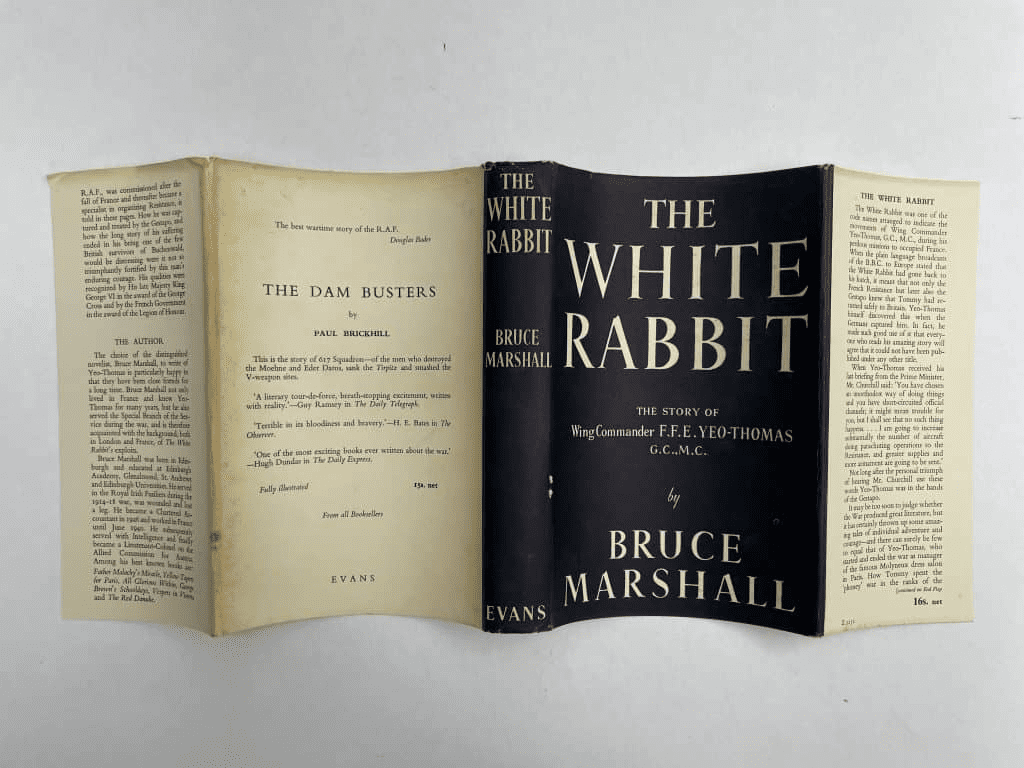
It is worth noting that after the end of the Second World War, Bruce decided to dedicate himself fully to his writing.
One of his most famous post-war books was The White Rabbit. It was a biography of Wing Commander Forest Frederick Edward Yeo-Thomas. Within its pages, readers learned about the heroic deeds and hardships this hero endured as a military adviser for the Special Operations Executive (SOE), attached to the French Resistance during the Second World War.
Books with Religion as a Central Theme
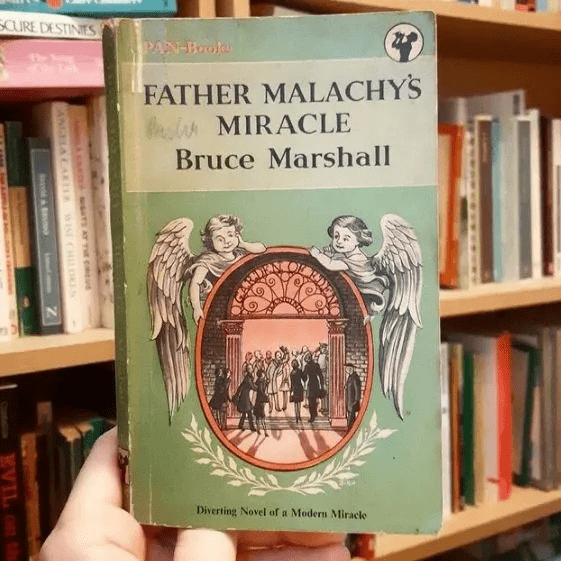
As mentioned earlier, religion is a central theme in many of Marshall’s works. For instance, the protagonist of his novel Father Malachy’s Miracle—an innocent Scottish priest—encounters sinful behaviour and, as a result, witnesses a genuine miracle.
The author’s later works also tell stories of clergymen who face temptation but successfully overcome it. These include books such as The World, the Flesh, and Father Smith, Father Hilary’s Holiday, and The Month of the Falling Leaves.
A Distinctive Trait
When speaking of expatriate writers, it is fair to say they all share one common trait: a great love for their homeland. Authors often generously share this feeling in the pages of their works, and Bruce Marshall was no exception. The plots of many of his books are either set in Great Britain, or their main characters are British.
It is widely believed that the writer’s attitude towards his native land is felt most vividly in his work The Black Oxen.
Thus, Bruce Marshall became one of the most widely read and popular writers to come from Edinburgh. His works have been published in at least nine languages: English, French, Dutch, Italian, German, Czech, Polish, Spanish, and Portuguese. Perhaps this is the greatest proof of his talent. After all, when the results of one’s work are in such high demand, it certainly means it was all worthwhile.