

Edinburgh can rightly be called a cradle of immense talent. The city has produced distinguished figures across numerous fields, including literature, music, film, theatre, science, and politics. The abilities of these individuals were so profound that they not only captured the heart of their home city but also made a significant name for themselves on a much larger stage. Find out more at edinburghski.
The achievements of these historical figures have not lost their relevance over the years; they continue to serve as a benchmark in their respective fields. Meanwhile, Edinburgh’s contemporary figures are no less impressive, demonstrating remarkable skill and giftedness that rivals their predecessors.
Furthermore, when comparing historical figures with contemporary ones, an interesting point emerges. It’s fascinating to observe how approaches to work and personal values have evolved over time. These elements, after all, form the very foundation for self-realisation and the ability to make one’s mark on the world.
David Hume is one of Edinburgh’s most renowned native sons. He is not a contemporary figure, having lived and worked in the distant past, but this makes his work no less compelling. In fact, his character and approach to his work deserve special attention.
Although he was a man of many talents, the field where he truly unlocked his potential was quite unusual: philosophy. It brought him his greatest fame. Hume’s primary goal was to create a naturalistic science of man, one that would explore the psychological foundations of human nature.
Later in life, David faced numerous obstacles that, at times, hindered his progress. However, his story serves as a powerful example that great desire and self-belief are all one needs to realise their potential. This makes his personality all the more fascinating and inspiring.
Early Years
The future philosopher was born in Edinburgh in 1711.
From a young age, David showed immense intellectual potential. In other words, he was an exceptionally bright child. This likely played a key role in his admission to the University of Edinburgh at the remarkably young age of not yet 14.
Leaving University
However, it soon became clear that the young man had little interest in his university subjects, with the exception of philosophy. He even held little respect for his professors. It is therefore unsurprising that he eventually put his studies on hold.
A Necessary Diversion
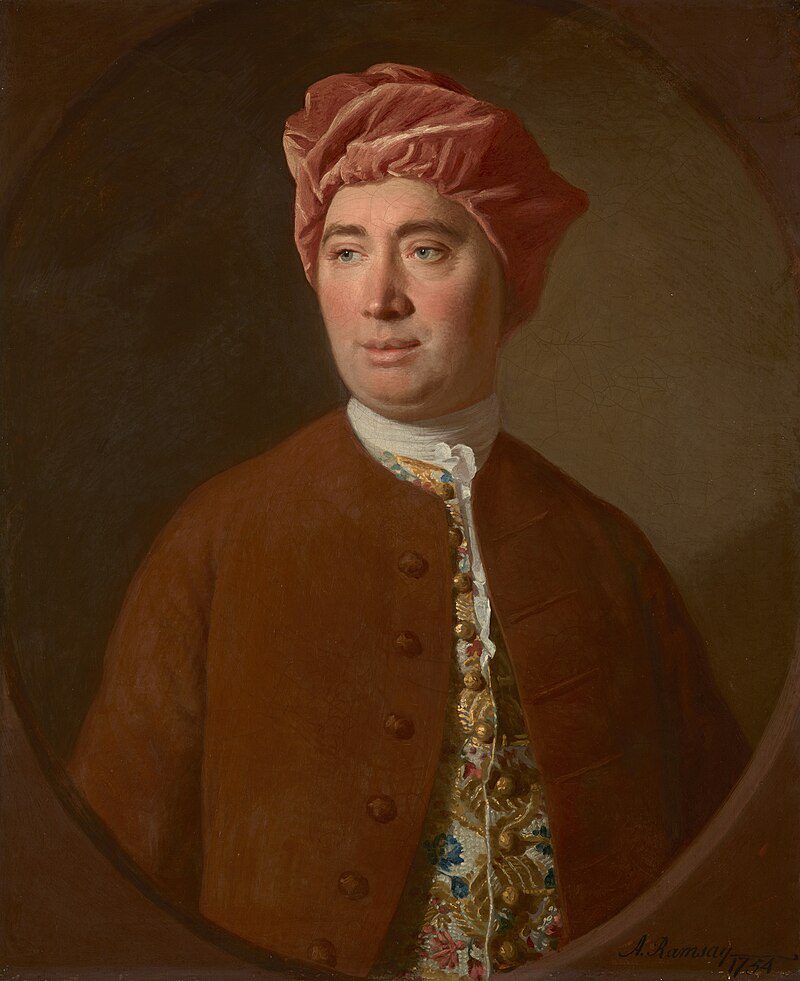
Hume became so engrossed in his philosophical contemplations that he found himself 25 years old without any source of income, having never completed his education.
As a result, David had to take a position as a merchant’s assistant.
The Bestseller
However, it must be said that he soon found success as an essayist. He also secured a post as a librarian at the University of Edinburgh. These two roles provided Hume with the income he needed.
It is worth noting that David used his time in the university library to his full advantage. With access to a rich collection of materials, he began his research and went on to write a massive six-volume work, The History of England, which became a true bestseller.
His True Passion
Yet, philosophy remained more than just a hobby for Hume. The ultimate proof of this was his great work, A Treatise of Human Nature, which he wrote over four years and completed in 1738.
Although most scholars consider A Treatise of Human Nature to be one of the most important books in Western philosophy, British critics at the time disagreed entirely, deeming Hume’s creation to be “unclear and abstract”.
A New Chapter

In 1741, Hume attempted to secure a position on the faculty for ‘Pneumatics and Moral Philosophy’ at the University of Edinburgh, but he was rejected.
However, this did not dampen David’s determination to develop his philosophical work. To some extent, his interactions with various thinkers of the Scottish Enlightenment spurred him on.
Soon after, he wrote Philosophical Essays Concerning Human Understanding.
It must be said that this work proved to be more successful than A Treatise of Human Nature.
Religious Views
When discussing a figure like David Hume, it is fair to say that his religious views significantly hindered his career.
It was primarily because of these views that he was denied positions in the philosophy faculties at both the University of Edinburgh and the University of Glasgow.
These views amounted to atheism and a refutation of all things religious. Unsurprisingly, this did not sit well with society at the time.
In the 1750s, his friends even had to save him from a trial where Hume stood every chance of being convicted of heresy.
Naturally, David actively expressed his position on religion in his works.
His Philosophical Essays, for instance, became an example of his clear anti-religious stance.
London
In 1763, Hume left his native Edinburgh to visit Lord Hertford in Paris. As it turned out, he was offered a new position there that he could not refuse.
The post was Secretary to the British Embassy.
After working in Paris until 1766, David left the city to travel to England with Jean-Jacques Rousseau. However, they had a major falling out immediately upon their arrival.
Nevertheless, this did not compel David to leave London. In 1767, he was appointed to the post of Under-Secretary of State for the Northern Department.
Hume returned to Edinburgh in 1769 and remained in his home city until his death in 1776.
His Final Work

It is important to note that during the final year of his life, Hume worked on a very short autobiographical essay titled “My Own Life”. Though the work is less than five pages long, it contains the author’s fascinating reflections on his life.
In the essay, David confesses to the reader that his main passion in life was a love of literary fame. He also mentioned the reason for the initial failure of A Treatise of Human Nature, believing he had rushed its publication.
However, David’s interesting thoughts on his life do not end there. In the short essay, he managed to share many impressions of various life situations.
It is perhaps for this reason that this final essay of Hume’s creative and earthly life later became one of his most famous works. The piece continues to attract interest from critics, biographers, and scholars, who are all keen to explore the thoughts of the renowned philosopher.
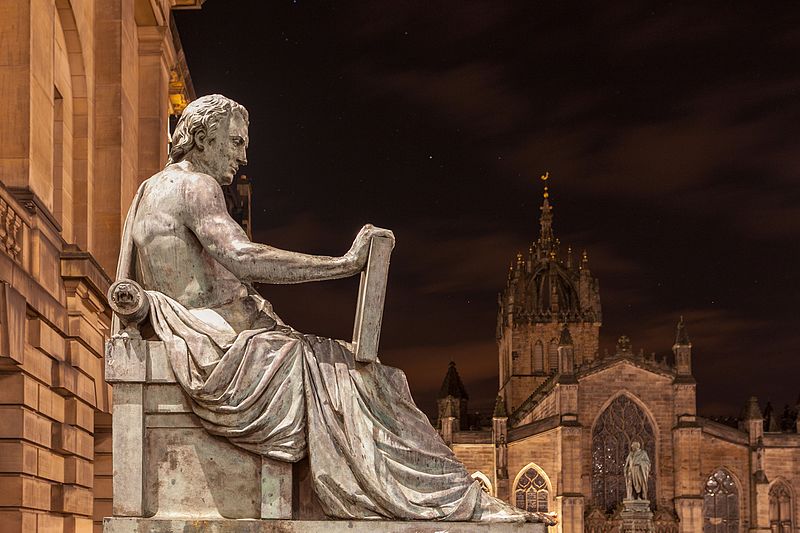
Thus, although David Hume can be perceived in different ways (particularly due to his personal religious convictions), he secured his fame as one of Edinburgh’s most celebrated philosophers. For many years now, his works have remained relevant, and scholars continue to study them, each time discovering new facets of this remarkable man’s talent.