

Edinburgh has long earned its reputation as a city of talent. Many locals have managed to reach the pinnacle of their professions, and creative pursuits are no exception. In fact, they have rightly carved out a special niche. This is because the natives of Edinburgh have, since ancient times, shown incredible activity in acting, writing, music, and fine art. Many of their works have won admirers, and the members of this bohemian set have been met with respect, honour, and high praise. Find out more at edinburghski.
David Harding is one of Scotland’s most renowned artists. His career and life path are a testament to his uniqueness and, of course, to the fact that art is his true calling.
An Education to Realise Creative Potential
David was born in 1937, and from a young age, he showed clear creative abilities. Therefore, once his childhood years were behind him, he decided to become a student at the Edinburgh College of Art.
Harding studied at the institution from 1955 to 1959, where he paid special attention to the sculptural use of glass, ceramics, and concrete. In 1960, he enrolled at The Moray House School of Education and Sport.
Sharing Knowledge and Moving to a Distant Land
Gaining a teaching qualification gave David the opportunity to try his hand as a lecturer. As a result, between 1961 and 1963, he worked in various Scottish schools. Then, in 1963, he made a sudden decision to move to Nigeria. This initiative was linked to an opportunity to join the art faculty of a local college, a wish that was destined to be fulfilled. Harding worked in Nigeria until 1967. He returned to his homeland at the age of 30 and immediately ended his teaching career. Instead, David began to work actively on creating various sculptures, receiving numerous commissions.
A Period of Creating Numerous Unique Works
However, Harding was engaged in this kind of freelance creativity for only a year. He then decided to respond to a vacancy at the Glenrothes Development Corporation.
So, in 1968, he began collaborating with the planning department. Here, he managed to create interesting works for various sites. To realise his ideas, the artist used the most ordinary materials, particularly concrete and brick.
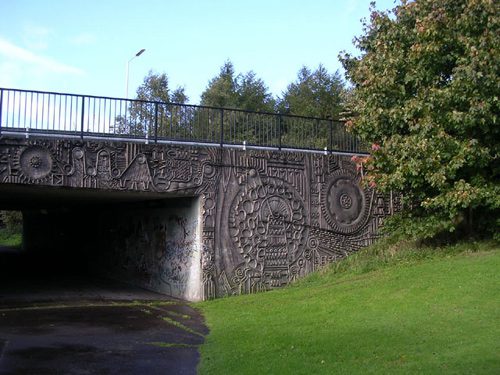
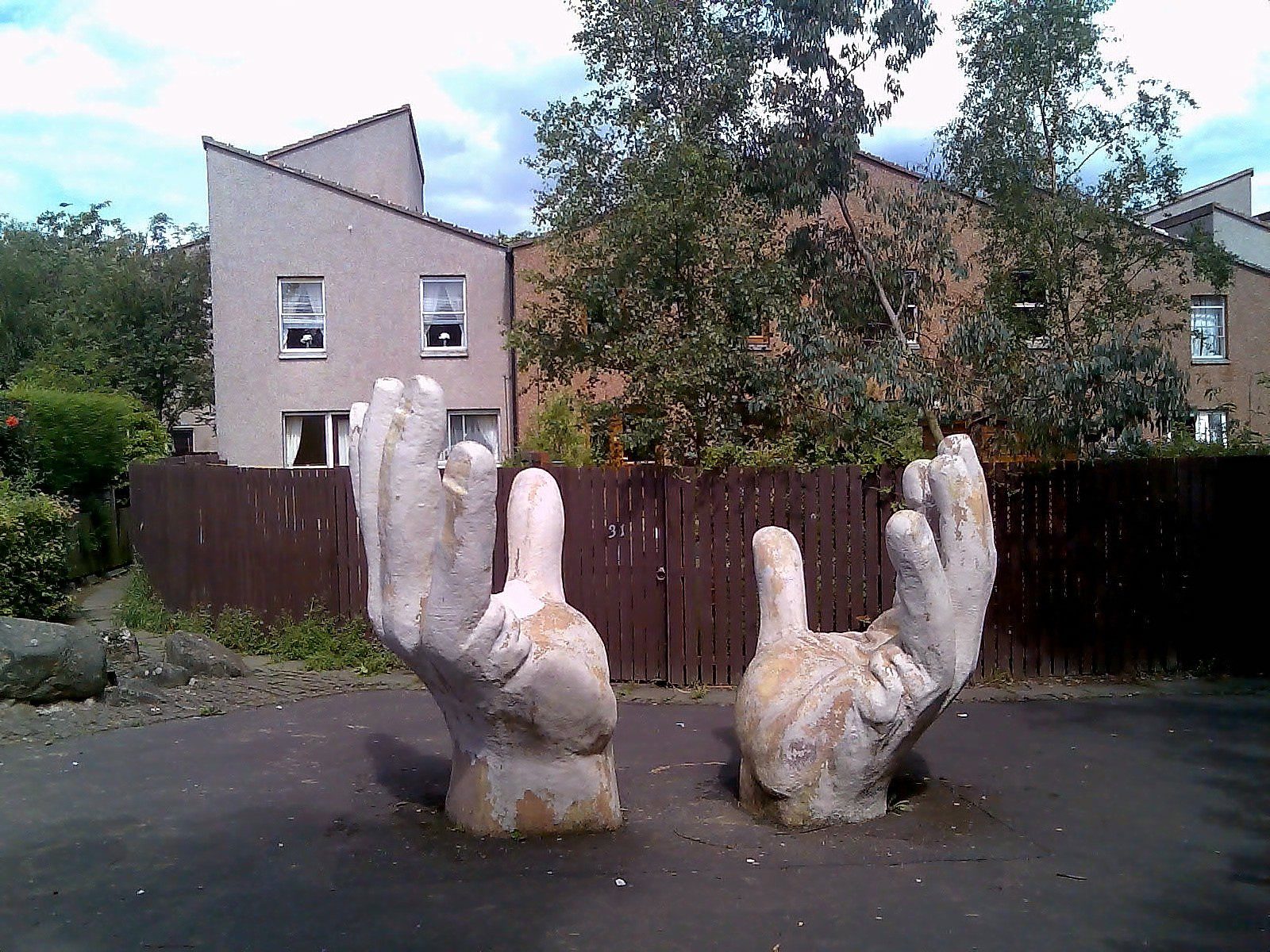
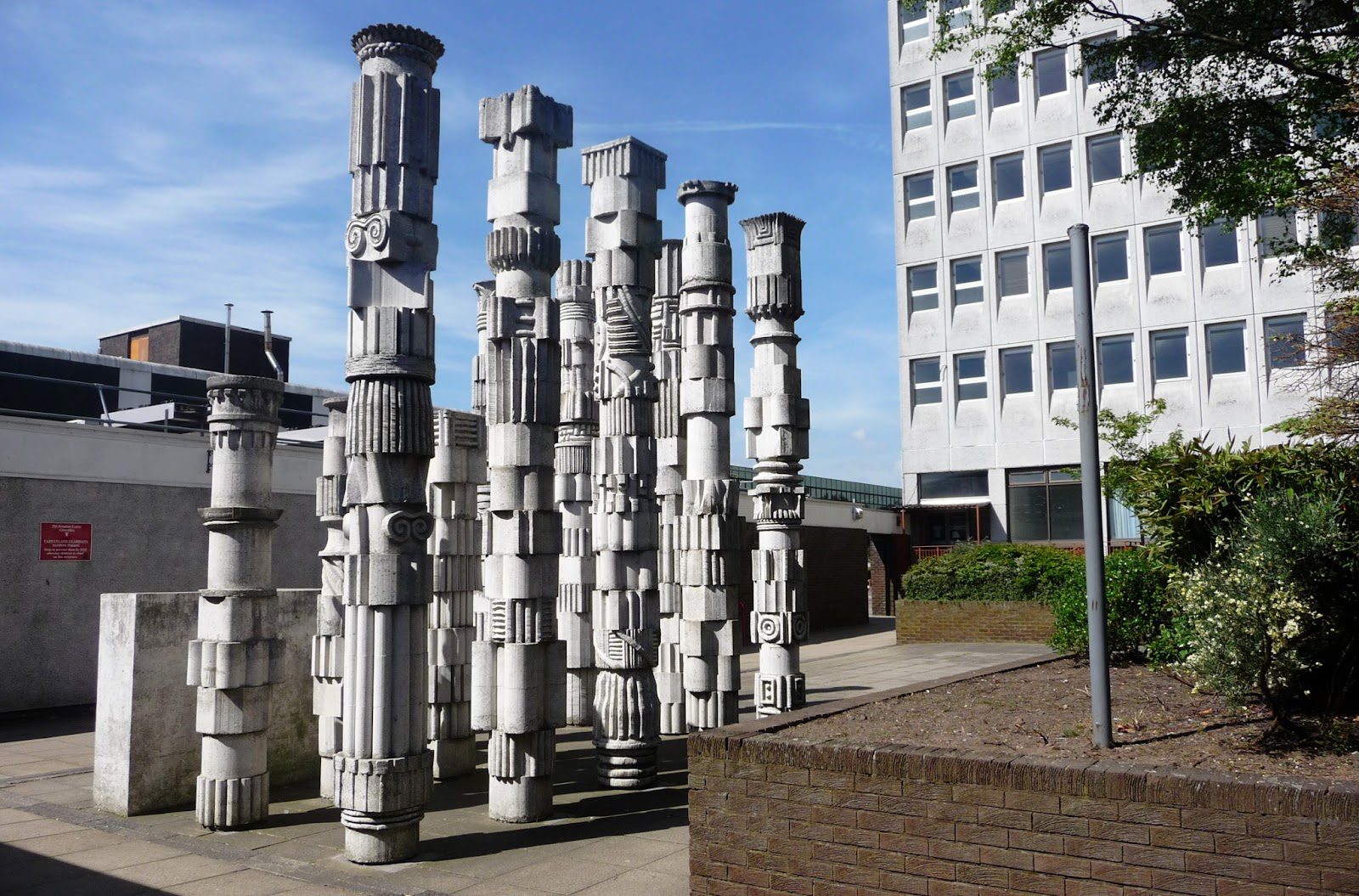
Among David’s works created during this time, it is fair to single out: Henge (a spiral of cast concrete slabs), Industry (a mural decorating an underpass, based on African hut motifs), and Heritage (concrete relief columns). All of them are a true embodiment of Harding’s creative potential and his unique perspective on art. He managed to bring to life ideas that, to some extent, might have initially seemed mad. However, the result itself was so successful that it surpassed all expectations. Each of the created objects gained great value and, of course, countless admirers.
A Groundbreaking Course by a Popular Artist
In 1978, David returned to what he had done many years before: teaching. He became a lecturer at Dartington College.
The year 1985 was marked by the launch of a special course created by Harding. This was a subject called Environmental Art, which the artist taught personally at The Glasgow School of Art.
Thus, David Harding was able to become one of Scotland’s most famous artists. His style and manner are truly unmistakable. As a result, each of the artist’s works turned into something amazing and original. Perhaps it was this very trait that became decisive in the advancement of David’s creative career. After all, as is well known, novelty is a key factor in art for further promotion and development.