

In the field of art, you can find many distinguished figures born in Edinburgh. The city proves to be a true cradle for unique individuals. They subsequently find success in various fields, but creativity can confidently be called the leading pursuit where natives of the Scottish capital realize their potential. More at edinburghski.
Sir William Allan is one such person. He was a distinguished Scottish artist who created unique works. Crucially, he managed to achieve genuine fame during his lifetime.
But something else is equally striking. This man was truly dedicated to art. No matter what happened in his life, he continued to create. Masterpieces of painting flowed from Allan’s brush, and he never tired of producing paintings that, in content, technique, and skill, seemed to surpass one another. William’s desire to paint was so strong that even health problems did not stop him. As a result, the artist left behind a considerable legacy of his works. And the manner of his death was worthy of being depicted on the finest canvases.
Early Years and Education
William was born in Edinburgh in 1782. When it was time to go to school, the boy became a pupil at the famous The Royal High School. However, Allan gradually felt an immense pull towards art. Therefore, it was decided that he should become more closely acquainted with the field. He began studying under John Graham at The Trustees’ Academy.
During his studies, it became increasingly clear that the young man possessed talent. This meant he needed to move to London and enroll at The Royal Academy of Arts. William successfully achieved this goal. And in 1803, he presented his first painting to the public.
The Long Journey
However, luck did not favour the young artist in London. So, in 1805, he set off for Russia. En route, Allan’s ship was wrecked. Stopping in Klaipėda, he had to work for a while to raise money for the rest of his journey. After that, William travelled overland to Saint Petersburg. There, he made many friends and became quite proficient in the Russian language. But the artist’s adventures did not end there.
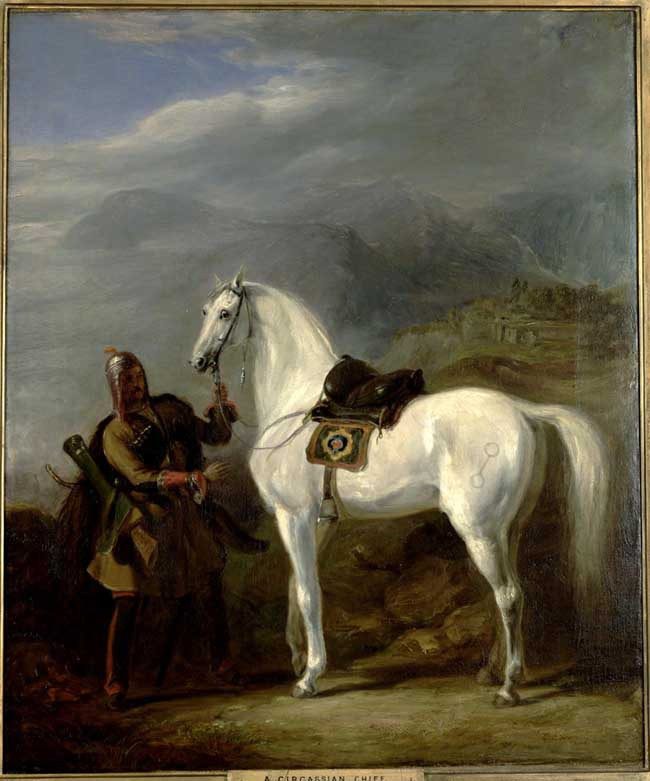
He then spent several years in Ukraine, making occasional trips to Turkey and other countries. He was particularly drawn to the culture of the Cossacks, Tatars, and Circassians.
The Return
When the artist decided he would like to return home, his plan was thwarted by the Russo-French War of 1812.
Allan was only able to reach his native Edinburgh in 1814.
The following year, 1815, The Royal Academy of Arts showed interest in his work *Circassian Captives*.
A New Cycle of Works
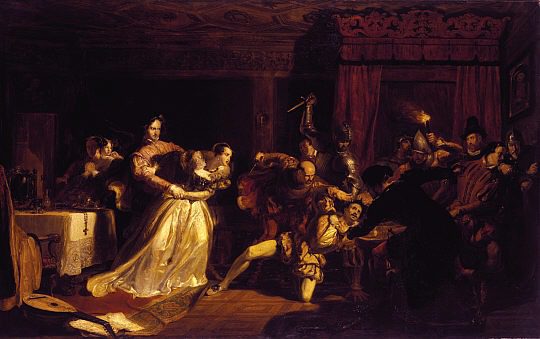
It is important to note that the next stage of Allan’s work focused on scenes from Scottish history. The artist painted these under the influence of the novels of Walter Scott. The painting *Death of the Regent Murray* is particularly noteworthy in this cycle. It was thanks to this work that the artist was elected a member of The Royal Academy of Arts.
Forced Departure
In 1826, William was appointed Chairman of The Trustees’ Academy in Edinburgh. However, shortly after taking up this position, Allan’s health deteriorated sharply. The main issues were related to his eyesight, and the artist was threatened with blindness. To regain his strength, he decided to spend the winter in Rome, before heading to Naples. William’s travels then took him to Constantinople (modern-day Istanbul) and Greece.
The artist returned to the Scottish capital in 1830.
A Brilliant Painting
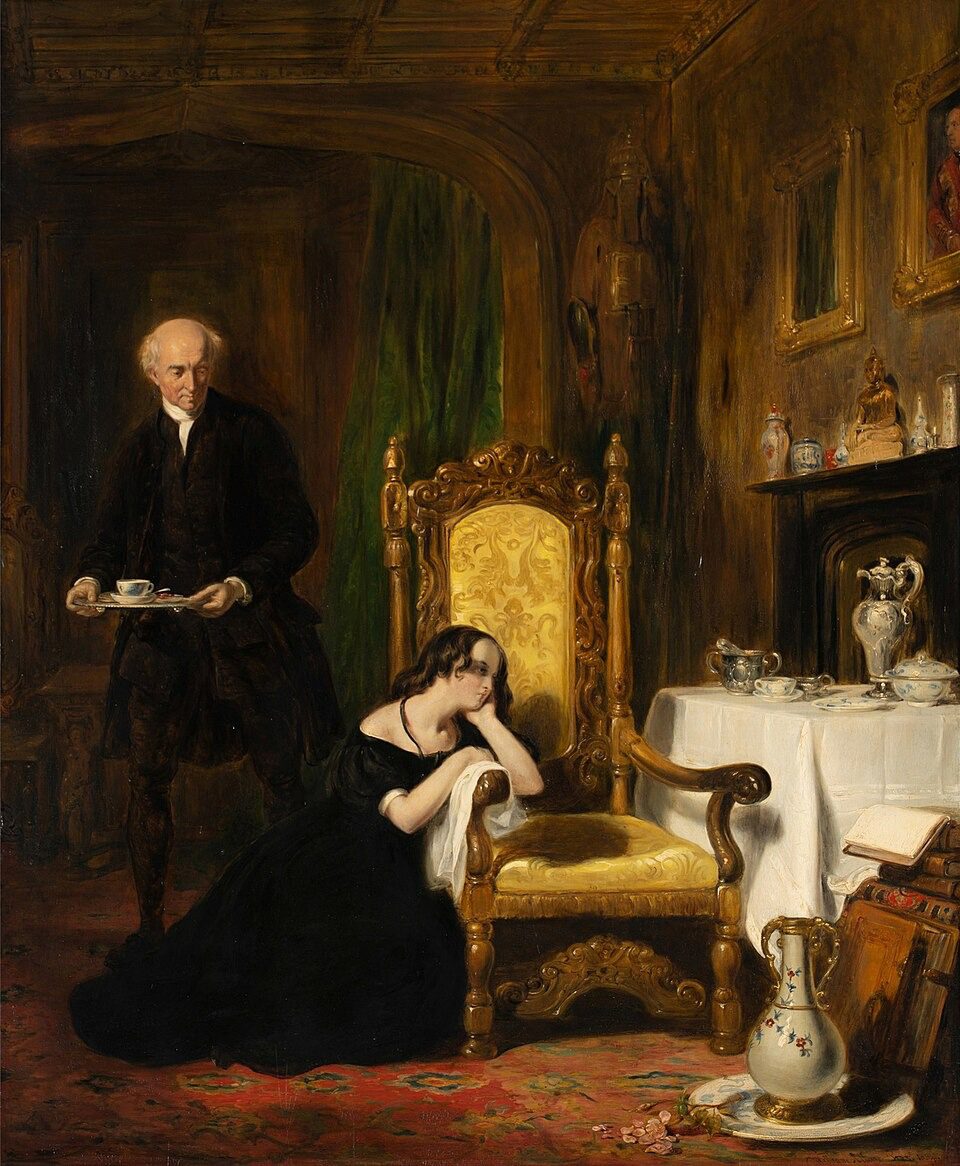
The year 1834 saw Allan visit Spain and Morocco. It was then that he created the striking painting *The Orphan*, which depicted Scott’s daughter sitting beside her late father’s chair.
The following year, 1835, William was elected a member of The Royal Academy of Arts, and in 1838, he became President of The Royal Scottish Academy.
Battle-Themed Canvases
When studying the biographies of famous artists, one often notices that many transition to calmer paintings toward the end of their lives. These works often depict a sense of complete serenity.
But this was not the case with William Allan. He dedicated his final years primarily to battle scenes.
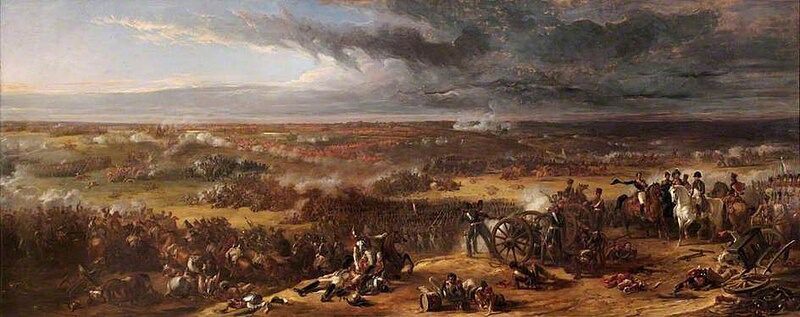
In 1843, for example, he presented the painting *Battle of Waterloo from the English side*.
The life journey of the famous artist came to an end on 23 February 1850. Allan was found dead at his home in Edinburgh. His death came while he was working on a large-scale painting dedicated to The Battle of Bannockburn.
This is surely the kind of passing many artists dream of. William Allan was sincerely devoted to art, and despite everything, he continued to paint, creating ever-new masterpieces. As his biography shows, even at the moment of his death, he was engaged in his beloved work. Such an ending, one must agree, is itself worthy of depiction on canvas. Who knows, perhaps one day this very event will inspire someone to create a painting titled “Allan: The Death That Defied Art.”